
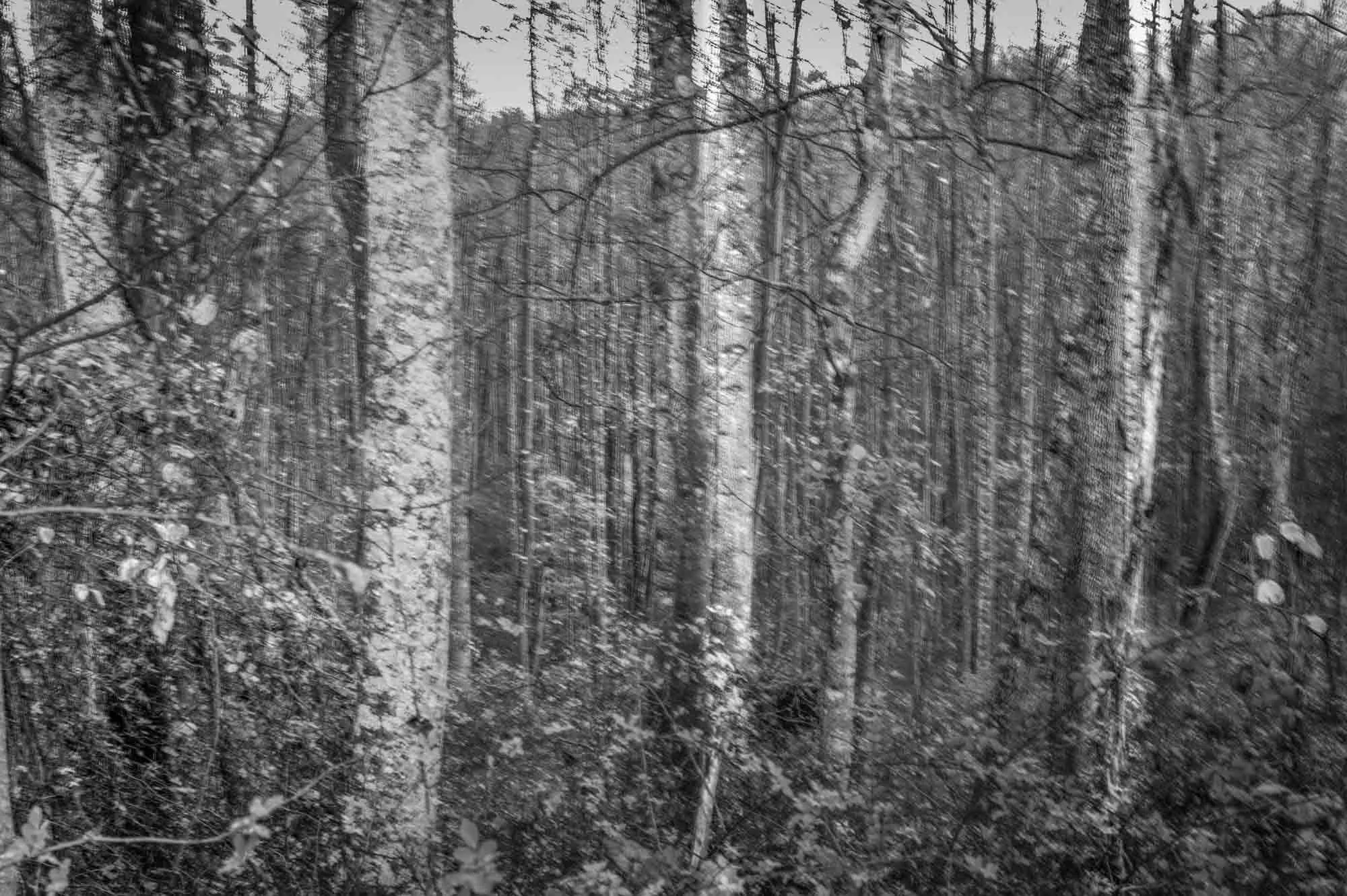
Land Wild, 2024 "That in a vacant soyle, hee that taketh possession of it, and bestoweth culture and husbandry upon it, his Right it is." John Cotton, God's Promise to His Plantation, Sermon to Departing Pilgrims, Southampton, England, 1630 Few Europeans recognized Native Americans' ways of living within America's ecosystems as equally valid to their own. Colonists justified conquest by asserting that property rights required land enclosure and improvement, denying Native Americans ownership. This Eurocentric view dismissed the significance of Native ecological practices and "paved the way for destroying it" (William Cronon, Changes in the Land, revised edition, Hill and Wang, New York, 2003, p. 57).
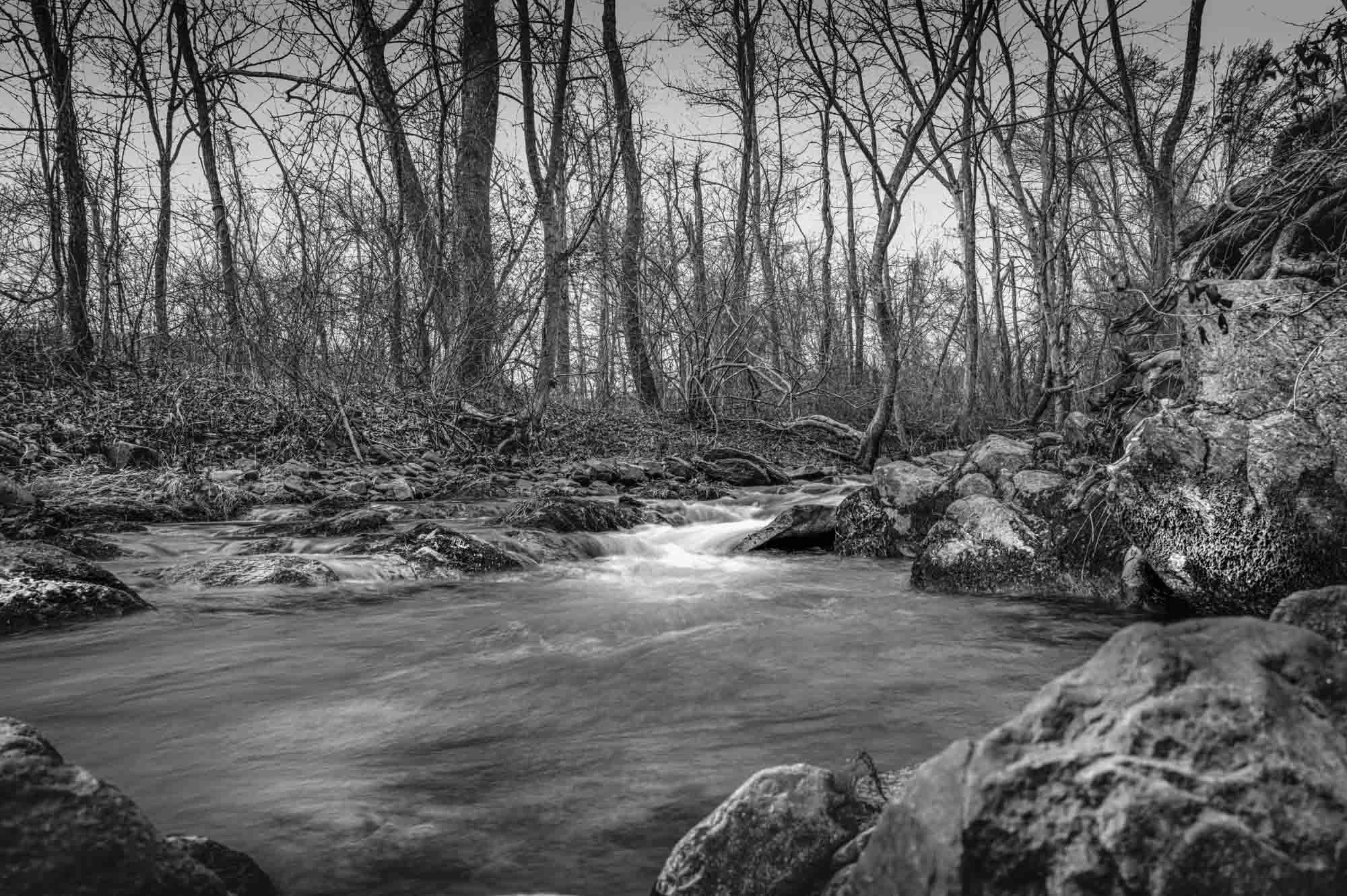
Land Bound, 2024 George the Second …do give grant and confirm unto David Mills one certain tract or parcel of land in the County of Hanover on the north fork of the Moremans River… Virginia Land Office Patents No. 18, 1738-1739, page 535, 12 March 1739 Rivers served as critical boundary markers in early royal land grants. This reliance on natural boundaries reflects the colonial emphasis on geography as an early determinant of legal and economic order.
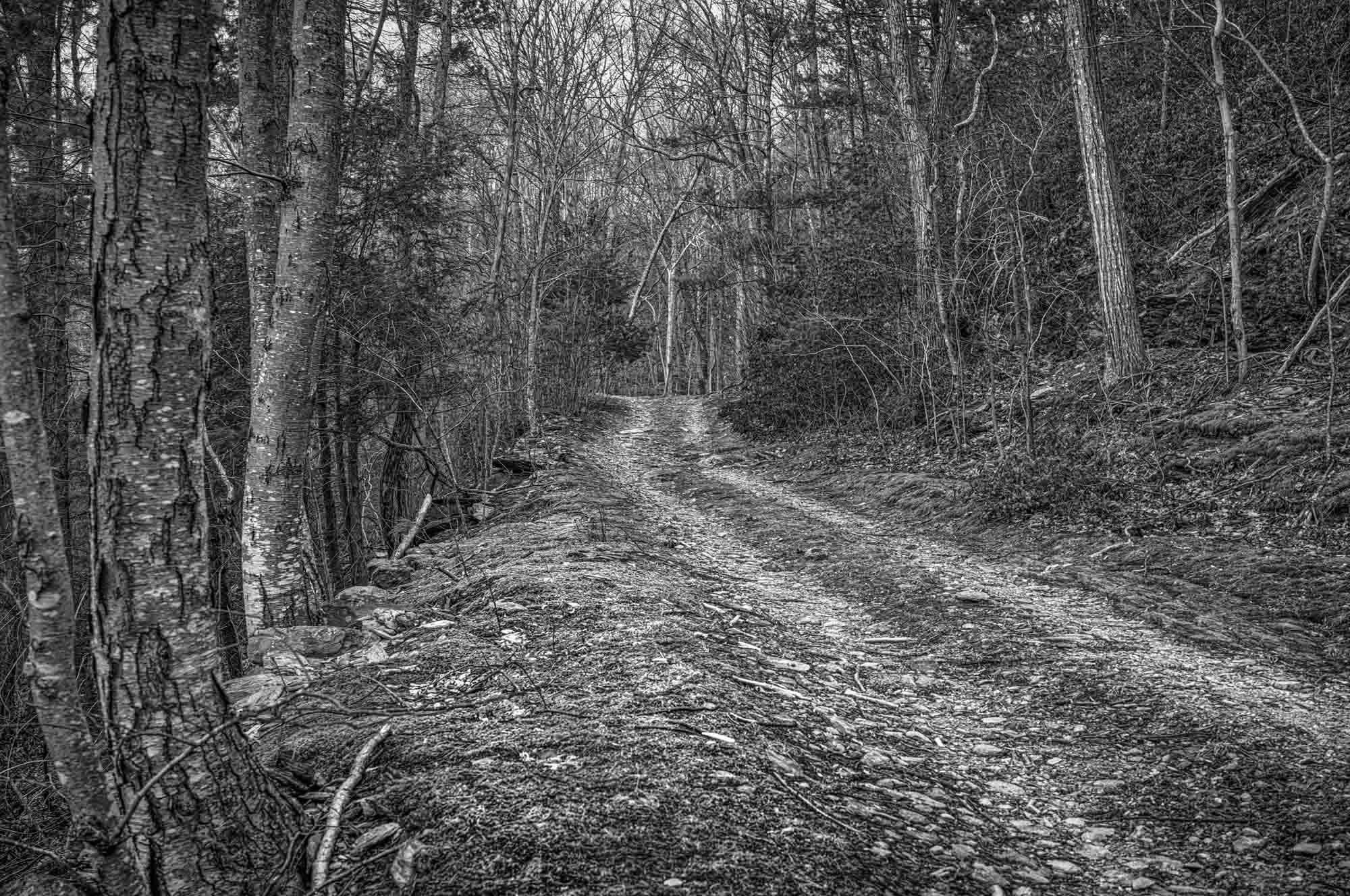
Browns Gap Turnpike, 2025 Browns Gap Turnpike represents one of the earliest constructed boundaries of movement across the Blue Ridge Mountains. Completed in 1806 as a privately owned toll road, it drew economic lines through the landscape, controlling the flow of people and goods between regions. This path shows how routes of transit became commodified spaces with defined limits—physical manifestations of property rights extending beyond land to include the passages connecting them. What appears today as a simple mountain road, the turnpike has a storied history. In late April 1862, Stonewall Jackson marched his troops through Browns Gap in a brilliant act of deception at the start of the Shenandoah Valley Campaign, using his detailed understanding of geography to outmaneuver a larger enemy force.

Silent Stones 2, 2025 A rough stone rises from the earth, silent in the snow. It stands at the head of a grave – a boundary in its most unambiguous form. Hidden in the Virginia soil, this burial site belongs to an enslaved person. The enslaved burial ground is a liminal space, existing at the margins of geography, society, time, and life itself. Positioned at the edges of plantations, these cemeteries lay outside formal records, denying the humanity of the enslaved even in death. However, Edward Said advanced the concept of rival geographies as spaces that exist in opposition to dominant structures of power. In this view, burial grounds of the enslaved functioned as sites of resistance. Enslaved individuals, denied autonomy in life, claimed these spaces for mourning and remembrance. Funeral practices often crossed plantation boundaries, with communities gathering to honor the dead—including loved ones who had been sold away, reaffirming kinship ties in death despite forced separation in life.
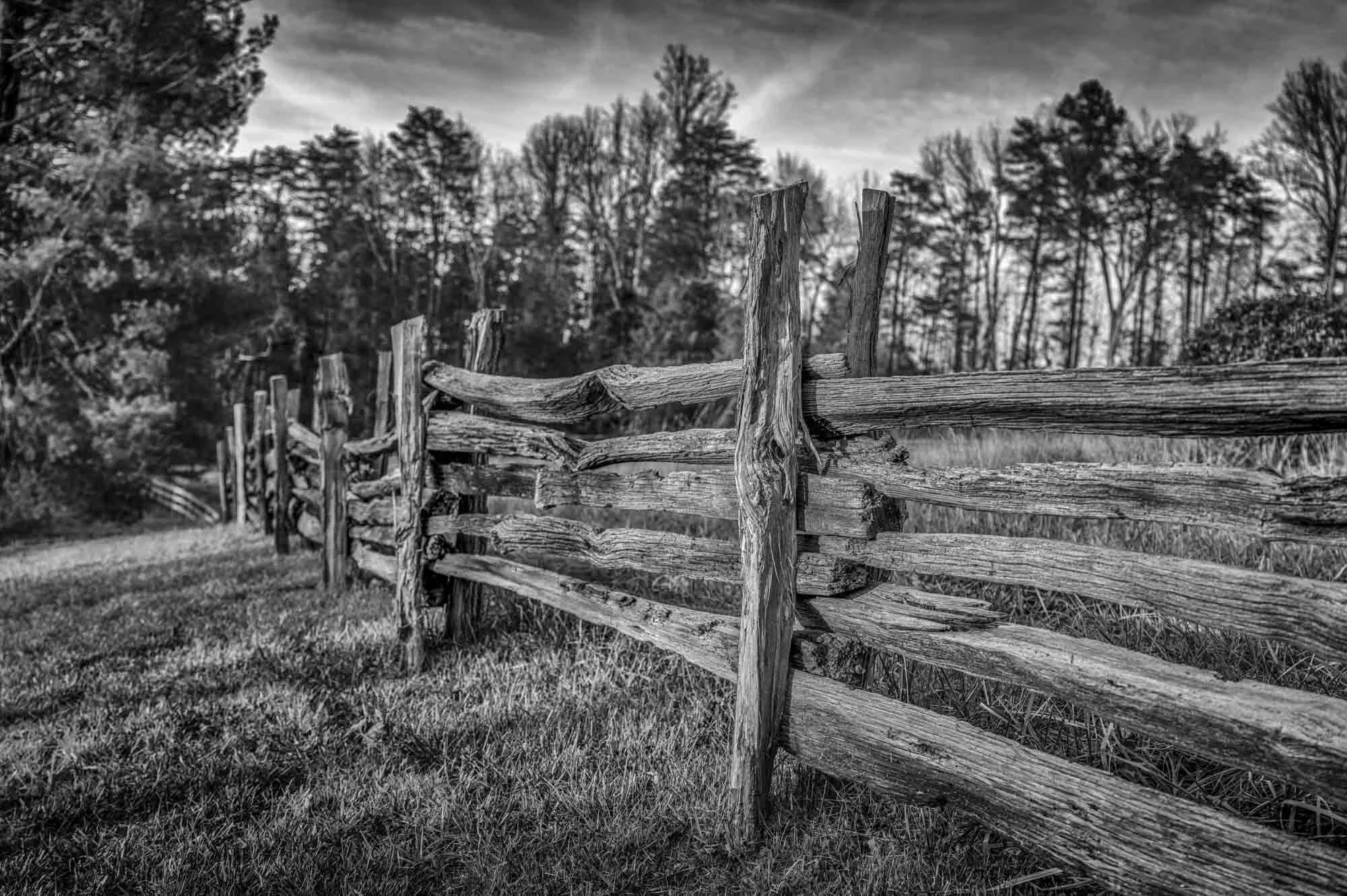
Land Divided, 2024 The abolition of primogeniture in Virginia in 1785 marked a significant turning point in the state's agricultural and economic history. By ending the legal practice of passing entire estates to the eldest son, landholdings were divided among heirs, leading to smaller farms. The average size of Virginia's plantations shrank from over 500 acres in 1785 to less than 150 acres by 1900. This forced landowners to diversify crops, shifting from tobacco to grains, fruits, and other products. The need to delineate ownership required widespread fencing, with chestnut split rails becoming the preferred choice.
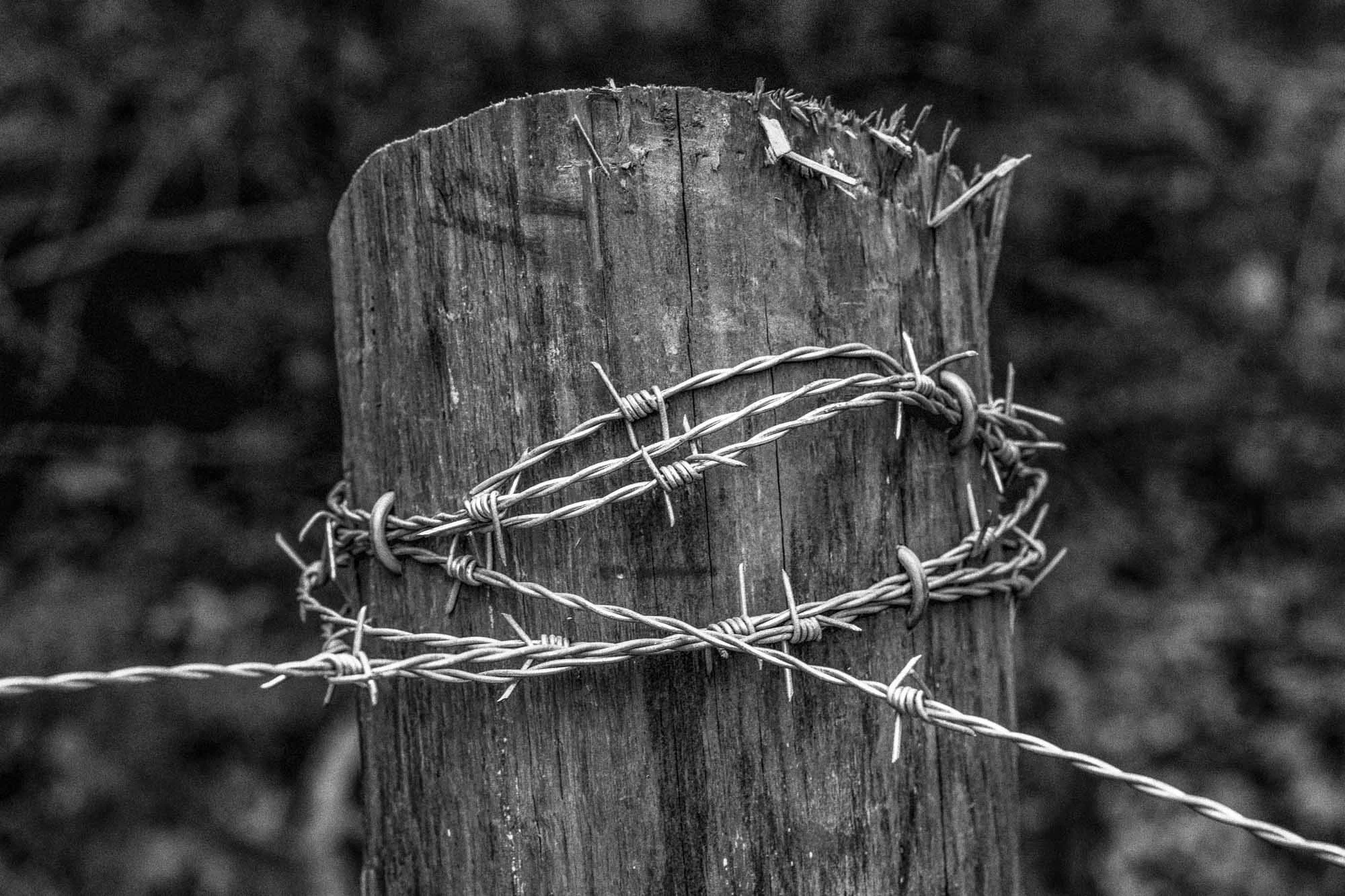
Land Enclosed, 2024 The annual production of barbed wire, invented in 1874, topped 200 million miles by 1885. While the impact of this technological innovation has been studied extensively on the transformation of the American Plains (see Richard Hornbeck, "Barbed Wire: Property Rights and Agricultural Development," I 125, no. 2 (May 2010): 767–810, published by Oxford University Press), similar economic benefits were enjoyed by farmers in the South. Wire fencing became a ubiquitous feature in the South and allowed farmers with little wooded lands to enclose fields economically.
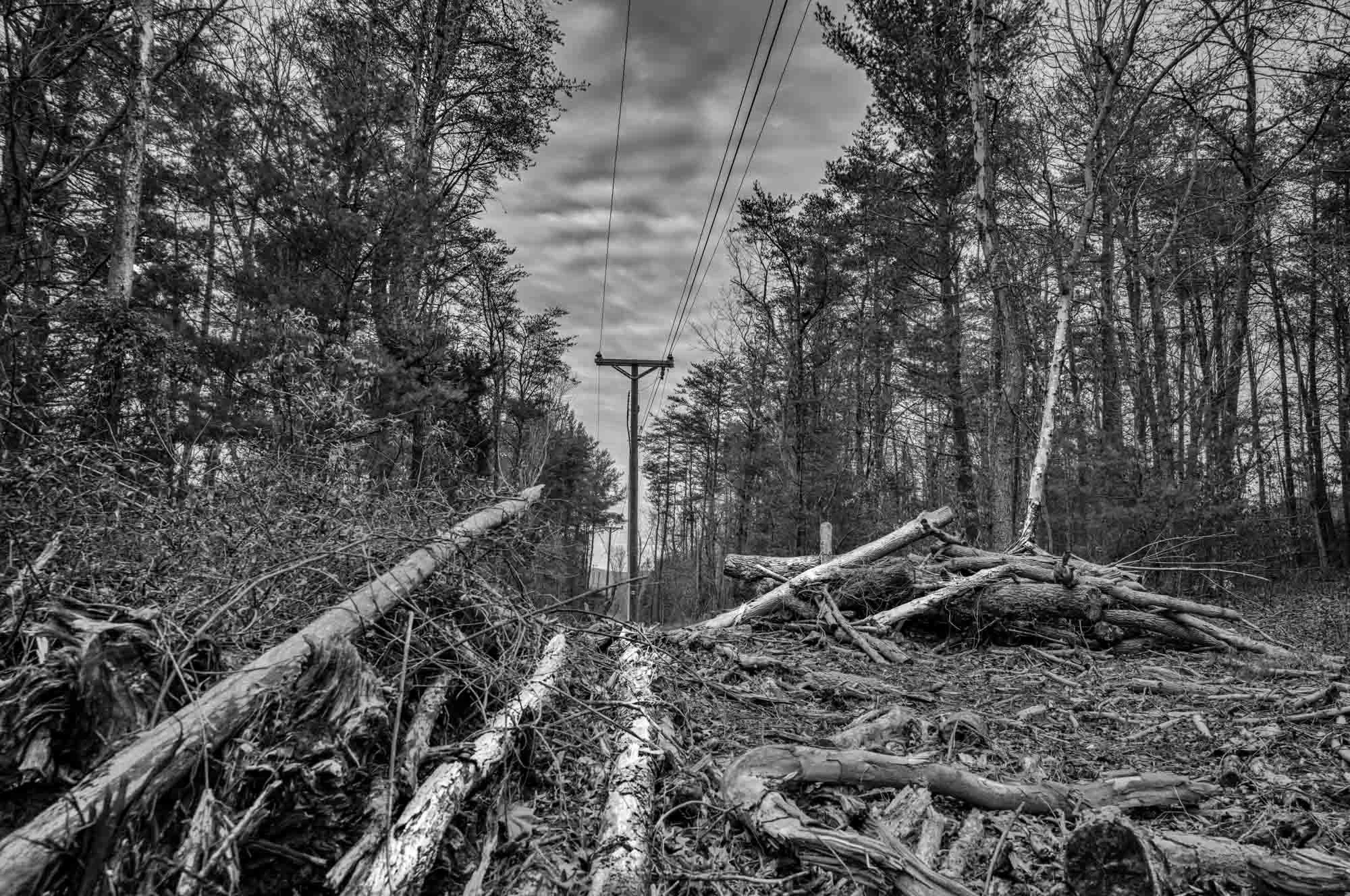
Eminent Domain, 2025 The power lines etched across this recently cleared forest landscape show the legal and cultural logics of eminent domain. Enshrined in the Fifth Amendment, this principle authorizes the taking of private property for public use, provided "just compensation" is rendered (U.S. Const. Amend. V). In the space between electrical current and resurgent forest, we find an invitation to assess the tangled histories and possible future of human-environment interaction.
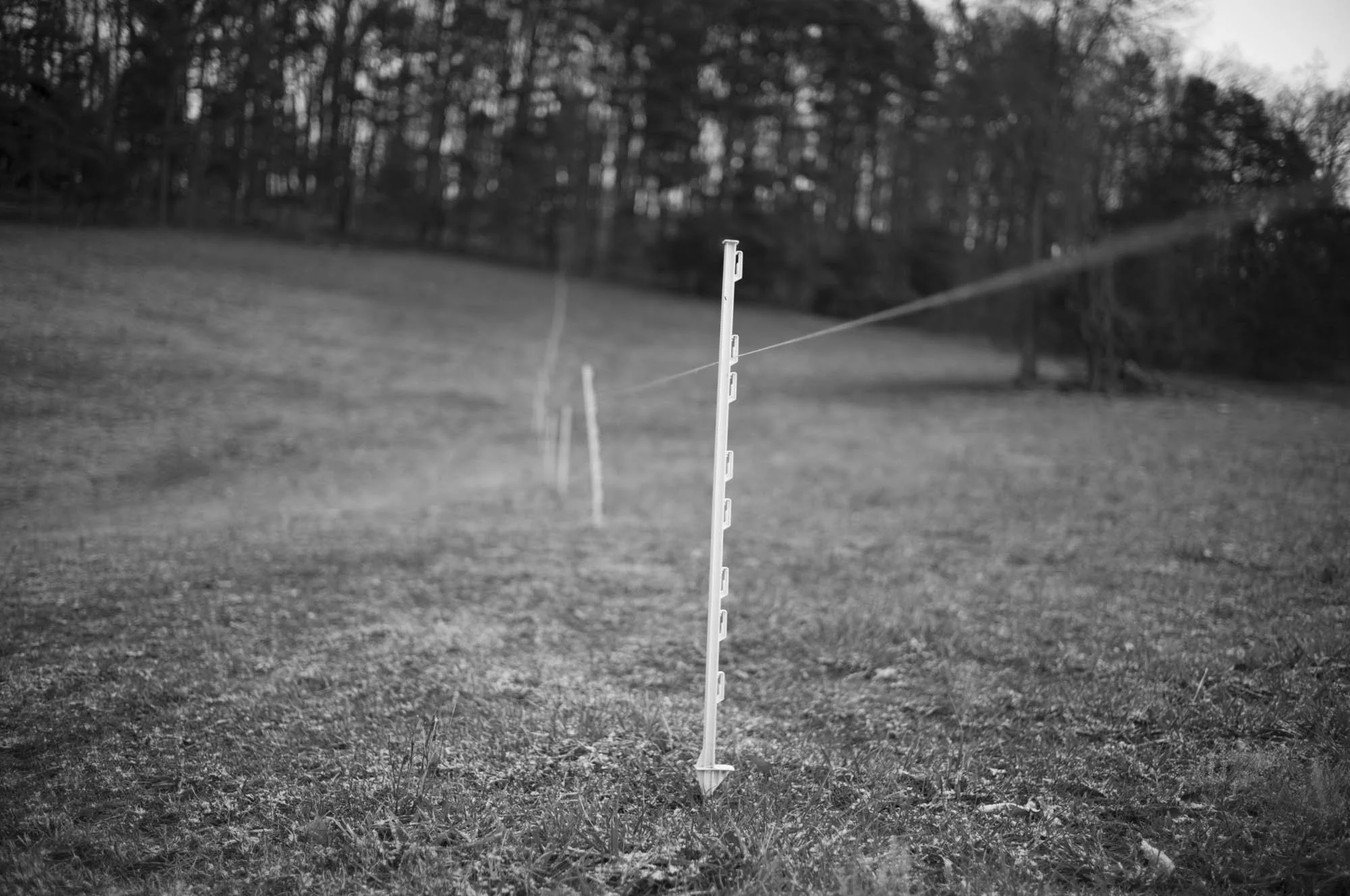
Land Transformed, 2024 Today's pastoral landscapes reflect centuries of ecological transformation. Before the arrival of Europeans, Native Americans skillfully managed ecosystems using controlled burns to create pastures to attract game and enhance biodiversity. This carefully balanced system changed dramatically after European colonization inadvertently introduced pasture grasses that overtook native species. Today, thoughtful farmers employ electric fences that enable efficient cattle cell grazing systems to reduce costly and harmful agricultural inputs. In this way, the fence plays a beneficial role in the transformation and health of our pastoral environment.